Teaching a workflow rather than a toolchain
University quantum labs spend most of their first month on environment setup. That month is the interesting part of the problem, and it is being wasted.
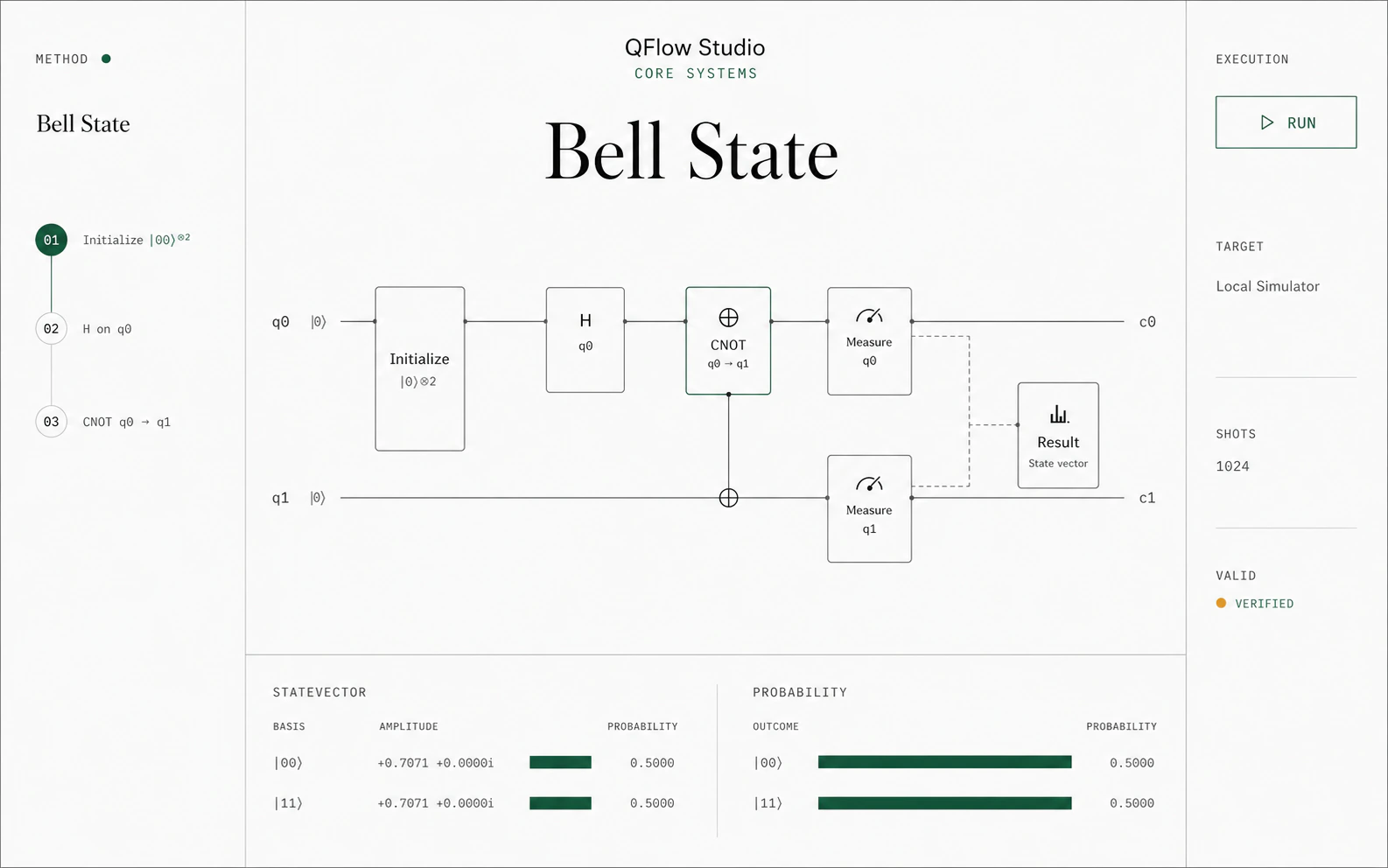
A recurring pattern in university quantum courses: the first several weeks go to environment setup, SDK version conflicts, provider credentials and the general friction of getting anything to run at all. By the time students reach the material the course is about, a meaningful fraction of the term is gone.
I do not think this friction is teaching anyone anything useful. Nobody learns quantum information from a dependency error.
What is worth the students’ time
The genuinely difficult ideas in this space are not implementation details. They are conceptual, and they are the ones that get squeezed.
Why does the calibration state of a backend change what your result means. What is a strong classical baseline, and why is choosing a weak one the most common methodological failure in the field. What does it mean for a result to hold within an operating envelope. How do you tell whether a difference between two distributions mattered to the decision that consumed them.
Those questions transfer. They apply to any hybrid system a student builds in the next decade, whatever SDK is current by then. Spending term time on SDK friction instead is a poor trade.
Workflow as pedagogy
The reason I care about this from a product angle is that a workflow record makes those questions visible rather than abstract.
If the brief, circuit, source, provider route, run context and evidence all sit in one record, a student can see that changing the backend changed the result and that the calibration conditions were different. That is a lesson delivered by the structure of the tool rather than by a lecture slide. If the same information is scattered across a notebook, a console and a screenshot, the lesson is available only to students who already know to look for it.
There is also a straightforward supervision benefit. A supervisor reviewing twelve student projects can read twelve evidence packets rather than twelve differently organised notebooks.
The boundary I keep
I am wary of a specific failure here, which is a tool that makes students productive without making them competent. Abstraction that hides the source code produces people who can operate a workflow and cannot debug one.
So the generated source stays visible and synchronised across Qiskit, Cirq and OpenQASM. The code that ran is the code on screen. If a student wants to leave the workflow and work directly in Qiskit, nothing prevents it, and I would consider a course that produced students unable to do so a failure regardless of what they built inside the tool.
The claim is narrow. This removes friction that was never teaching anything, and it makes provenance visible. It does not teach quantum information, and any tool that claims to should be treated with suspicion.